
What Every Canadian Gambler Needs to Know in 2026
Yes, Canadians can recover the 30% U.S. gambling tax withheld by the IRS on casino, poker, and sports betting winnings.
Recovery requires filing Form 1040-NR, obtaining an ITIN, and documenting your U.S. gambling losses.
The legal mechanism is Article XXII of the Canada-U.S. Tax Treaty, which allows loss deductions against winnings.
Under the 2026 OBBBA rules, a 10% taxable floor now applies, meaning only 90% of losses can offset winnings.
At Casino Tax Refund, we handle the entire recovery process as IRS-authorized Certified Acceptance Agents.
You hit a big win at a U.S. casino. Maybe it was a slot jackpot in Las Vegas, a poker tournament cash at the WSOP, or a sportsbook payout during March Madness. The excitement lasted about ten seconds, until the casino withheld 30% of your winnings on the spot.
For Canadians, this feels uniquely unfair. Gambling winnings are tax-free at home, so watching the IRS take a third of your money before you even leave the cage is jarring.
Here is the good news: that 30% withholding is often recoverable.
At Casino Tax Refund, recovering U.S. gambling tax for Canadians is our sole practice area. Over the past two years we have processed hundreds of claims in recovered withholding, and along the way we have encountered every documentation mistake, IRS delay, and treaty nuance that can derail a recovery. This guide is built from that front-line experience.
We will explain why the tax is withheld, how Article XXII of the Canada-U.S. Tax Treaty creates your legal right to a refund, and the exact step-by-step process to reclaim your money. We will also cover the critical changes under the new One Big Beautiful Bill Act (OBBBA) that affect every return filed for 2026 winnings.
Can Canadians Actually Get U.S. Gambling Tax Back?
Yes. Canadians can recover some or all of the 30% U.S. gambling tax by filing a U.S. Non-Resident tax return (Form 1040-NR) and properly documenting U.S. gambling losses under the Canada-U.S. Tax Treaty.
In many cases, the refund can be partial or even 100% of the tax withheld. The amount depends entirely on how well your losses are documented.
Field Note (Early 2026): In early 2026, we are seeing a 22% increase in claims from sports bettors, not just casino and poker players. The withholding thresholds for sports betting catch more Canadians off guard than any other category. A single winning NFL parlay can trigger a $600+ withholding that most bettors never expected.
Why Does the IRS Withhold 30% From Canadian Gamblers?
The United States Internal Revenue Service (IRS) views gambling winnings as taxable income. While Canadians enjoy tax-free gambling at home under the Canada Revenue Agency (CRA), the U.S. applies a flat 30% withholding tax on non-resident aliens.
This withholding is automatic. The casino acts as a collection agent for the IRS, and the tax is deducted before you receive your payout.
The withholding thresholds vary by game type:
Slot Machines and Bingo: Winnings of $1,200 or more (increasing to $2,000 under OBBBA for 2026).
Keno: Winnings of $1,500 or more.
Poker Tournaments: Generally, net winnings of $5,000 or more.
Sports Betting and Lotteries: Winnings of $600 or more (if the payout is at least 300 times the wager).
Certain games are exempt from withholding. Blackjack, Baccarat, Craps, and Roulette are generally not subject to the 30% tax for Canadians. However, mistakes happen at the cage frequently. If a casino withheld from one of these games, your case for recovery is even stronger.
For the full emotional and legal breakdown of how this system works, read our explanation of why the casino took 30% of your winnings.
How Does the Canada-U.S. Tax Treaty Protect You?
The reason you can pursue U.S. gambling tax recovery as a Canadian is found in Article XXII of the Canada-U.S. Tax Treaty. This specific provision allows Canadians to deduct their documented gambling losses against their U.S. winnings.
This is not a loophole. It is a negotiated bilateral treaty provision. Without it, you would have zero legal basis to claim back any of the 30% withholding. The treaty converts what would be a permanent loss into a recoverable tax overpayment.
The distinction matters. Standard non-resident alien (NRA) withholding rules impose a flat 30% tax with no deductions allowed. Article XXII overrides that default by granting Canadians the right to net their losses against their winnings. Note: This is not the same mechanism U.S. citizens use (Schedule A itemized deductions). The treaty creates a separate, standalone right for Canadian residents, which is why the filing forms and documentation requirements are different.
Standard Withholding vs. Treaty-Protected Recovery
The following table illustrates the practical difference between accepting the 30% withholding and filing a treaty-based recovery claim:
Scenario | Without Treaty Claim | With Treaty Claim (Art. XXII) |
|---|---|---|
U.S. Gambling Winnings | $20,000 | $20,000 |
Tax Withheld (30%) | $6,000 | $6,000 |
Documented U.S. Losses | N/A | $18,000 |
Taxable Income | $20,000 | $2,000 |
Final Tax Owed (30%) | $6,000 | $600 |
Refund from IRS | $0 | $5,400 |
That $5,400 difference is money sitting in an IRS account waiting to be claimed. Under pre-2026 rules, if you had $20,000 in documented losses, the entire $6,000 would be refundable. For 2026 winnings, the 90% OBBBA cap applies (see below).
What Is the Step-by-Step Process to Recover U.S. Casino Tax?
The entire recovery process centers on filing a specialized U.S. Non-Resident Alien Income Tax Return, Form 1040-NR. Here is how we handle it at Casino Tax Refund.
Step 1: Collect Your Documents and Prove Your Losses
This is the foundation of your claim. Without proper documentation, no amount of legal expertise can help. You need two categories of paperwork.
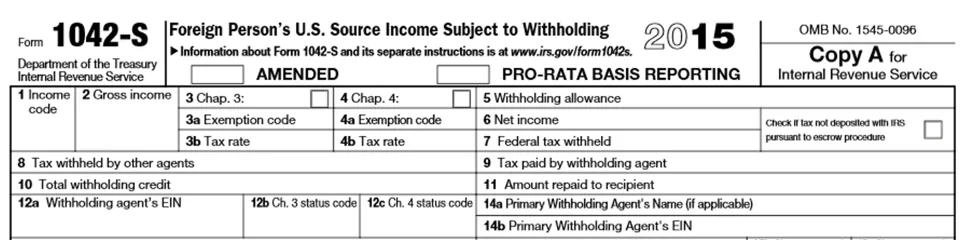
Form 1042-S (or W-2G) is the "Golden Ticket" from the casino. It proves the IRS received your 30% withholding and is the single most important document in your claim. You must attach the original copy to your return.
Form 1042-S is the standard form issued to non-resident aliens. Most Canadian gamblers receive this one.
Form W-2G is more common for U.S. residents but is occasionally issued to Canadians in error. Either form is valid for filing.
Proof of Losses is the second pillar. You must substantiate your U.S.-sourced gambling losses with detailed records:
Casino-issued Win/Loss Statements from each property where you played.
Personal gambling session logs documenting dates, venues, games, and results.
Tournament buy-in receipts, including re-entries and satellites.

Field Note (2026 Trend): In our practice, the #1 reason claims stall is a missing or mismatched Form 1042-S. Casinos sometimes issue them months late, or mail them to an old address. We retrieve these directly from casino compliance departments when clients cannot locate their copies.
Step 2: Obtain or Renew Your ITIN
You cannot file a U.S. tax return without a taxpayer identification number. Since most Canadians do not have a U.S. Social Security Number, you must apply for an Individual Taxpayer Identification Number (ITIN) using IRS Form W-7.
If you apply directly, the IRS typically requires your original passport to be mailed to its processing center in Austin, Texas, where it may remain for up to 12 weeks. That means no international travel for three months.
To avoid this, use an IRS Certified Acceptance Agent (CAA) like Casino Tax Refund. We certify your passport documents here in Canada, so you never mail your original identification anywhere. For full details on acceptable documents and submission rules, refer to the official IRS instructions for Form W-7.
We wrote a detailed ITIN walkthrough for Canadian applicants that covers identity document options, common rejection reasons, and processing timelines.
Step 3: File Form 1040-NR (U.S. Non-Resident Return)
This is the core legal mechanism to recover U.S. casino withholding tax. Form 1040-NR declares your U.S.-sourced gambling income and initiates the refund request.
You must use the necessary Schedule forms to officially apply the treaty benefit, justifying your deduction of losses against winnings. Schedule NEC reports your gambling income, and Schedule OI provides required non-resident information.
Common 1040-NR Rejection Reasons We See: The IRS will reject or delay returns for seemingly minor errors. The most frequent: mismatched name spelling between the W-7 and 1040-NR, missing Schedule OI checkboxes (especially the treaty country field), and unsigned forms. In our practice, we run a 12-point review on every return before it ships to Austin.
The IRS provides a dedicated resource page for Form 1040-NR here if you want to see the technical requirements.
Step 4: Submit and Wait for Your Refund
The complete package, including Form 1040-NR, Form W-7 (if applicable), Form 1042-S, and identity documents, must be physically mailed to the correct IRS processing center in Austin, Texas. Electronic filing is not available for non-resident gambling tax returns.
This is a paper-only process, which means you are placed in the IRS manual processing queue from day one.
The Recovery Process at a Glance
Collect Your Documents. Gather every Form 1042-S issued by the casino, plus buy-in receipts, session logs, and Win/Loss statements from each property where you played.
Obtain an ITIN. If you do not already have a U.S. Individual Taxpayer Identification Number, apply through a Certified Acceptance Agent so you never have to mail your passport to the IRS.
File Form 1040-NR. Submit a U.S. non-resident tax return claiming your treaty benefits under Article XXII and offsetting winnings with documented gambling losses.
Receive Your IRS Refund. The IRS processes your return, recalculates your tax liability, and mails a refund cheque for the difference directly to your Canadian address.
How Long Does a U.S. Gambling Tax Refund Take in 2026?
Once your return is filed, the waiting begins. Processing times vary depending on IRS workload, the completeness of your documentation, and whether your ITIN application is bundled with the return.
The Baseline: Generally, the IRS takes 6 to 9 months to issue a non-resident refund check.
The 2026 Reality: Following the record-breaking 43-day U.S. government shutdown in late 2025, the longest in U.S. history, we are currently seeing average wait times of 9 to 15 months.
Field Note (January 2026): Since January 2026, we have tracked an uptick in IRS correspondence requesting additional loss documentation before releasing refunds. Filing with incomplete records now almost guarantees a 6+ month delay on top of standard processing. This is why we insist on comprehensive documentation before we submit any claim.
Casino Tax Refund monitors your case status directly with the IRS. While we cannot make the government move faster, we ensure your filing is 100% accurate so the IRS does not send it to the back of the line for a minor error.
Critical Deadline: The 3-Year Filing Window. You have three years from the date of your winnings to file a U.S. non-resident tax return and claim your refund. After that, the IRS considers the withheld funds permanently forfeited. No exceptions. If you won money in 2023, your deadline is approaching fast. If you won in 2024 or 2025, you still have time, but starting the process early gives us room to track down missing 1042-S forms and resolve any documentation gaps before the clock runs out.
Can You File a U.S. Gambling Tax Claim Yourself?
Technically, you are absolutely allowed to file your own claim. Nobody is stopping you from downloading Form 1040-NR and mailing it to Austin.
However, the specialized nature of the forms, the strict document certification requirements for the ITIN, and the IRS zero-tolerance policy for errors make this a high-risk DIY project. When mistakes are made on these specialized tax forms, you risk permanently losing your refund or holding it in limbo for years.
We have seen returns rejected because of a single missing checkbox on Schedule OI. We have seen ITIN applications denied because passport copies were not certified by an authorized agent. These are not theoretical risks.
The Casino Tax Refund Difference
Certified Acceptance Agents (CAA): We verify your identification documents locally, so you never mail your original passport to the IRS. Your passport stays with you the entire time.
Fixed Fee Pricing: No percentage of winnings. No contingency cut. We charge a flat, fixed fee. The refund belongs to you, not us.
Money-Back Guarantee: We are so confident in our process that if we are unable to get your money back, we refund our service fee.
You beat the house to win the money. Let us handle the tax process to bring it home.
What Changed Under the One Big Beautiful Bill Act?
The One Big Beautiful Bill Act, enacted in July 2025, introduces changes that begin affecting gambling returns for the 2026 tax year.
Key Changes to Know:
Higher slot withholding threshold: Increased from $1,200 to $2,000. Fewer slot wins will trigger automatic withholding going forward.
90% loss deduction cap: Starting with 2026 winnings, only 90% of gambling losses can be used to offset winnings. This means that even if your losses equal your winnings, 10% may remain taxable.
Pre-2026 vs. 2026 Recovery: What the 90% Cap Means in Practice
Detail | Pre-2026 Rules | 2026 (OBBBA) Rules |
|---|---|---|
Winnings | $15,000 | $15,000 |
Documented Losses | $15,000 | $15,000 |
Allowable Loss Deduction | $15,000 (100%) | $13,500 (90%) |
Taxable Income | $0 | $1,500 |
Tax Owed (30%) | $0 | $450 |
Refund (from $4,500 withheld) | $4,500 | $4,050 |
Act now on 2025 winnings. For winnings occurring in 2025, you are still under the old rules, allowing for a 100% offset of losses against wins. There has never been a better time to file before these new limitations fully take hold.
For a deeper look at how these OBBBA provisions affect tournament players specifically, see our 2026 WSOP tax preparation guide for Canadians.
The bottom line: whether your winnings fall under the old rules or the new OBBBA provisions, the recovery process works the same way. Document everything, file on time, and let a qualified cross-border specialist handle the paperwork.
FAQ for U.S. gambling tax recovery for Canadians
How do Canadians recover U.S. gambling tax withheld by the IRS?
Canadians recover U.S. gambling tax by filing Form 1040-NR, the U.S. non-resident tax return. Under the Canada–U.S. tax treaty, documented U.S. gambling losses can be used to offset U.S. gambling winnings, which may result in a partial or full refund of the 30% tax withheld.
Is there a deadline to reclaim U.S. gambling tax?
Yes. Generally, you have three years from the date the tax return was due to file a claim. For example, if you had taxes withheld in 2022, you typically have until June 15, 2026, to file your recovery claim.
I lost my 1042-S form. Is my money gone?
Not at all. At Casino Tax Refund, we offer a specific service for retrieving lost tax forms. We can contact the casino compliance department on your behalf to obtain the official paperwork needed to file your claim.
What qualifies as a gambling loss for U.S. tax recovery?
The IRS allows you to deduct your losses up to the amount of your winnings. Losses include: Tournament buy-ins, losing wagers on slots or table games, and losing sports betting slips. It does NOT include non-gambling expenses like hotel stays, flights, or meals.
Which IRS forms are required for U.S. gambling tax recovery?
- Form 1040-NR (U.S. Non-Resident Income Tax Return) - Schedule NEC to report U.S. gambling winnings - Schedule OI for required non-resident information - Form 1042-S or Form W-2G issued by the casino Form W-7 if an ITIN is needed
Can Canadian casino losses be used to recover U.S. gambling tax?
No. Only U.S.-sourced gambling losses from the same calendar year can be used to offset U.S. gambling winnings. Losses incurred at Canadian casinos or non-U.S. platforms are not eligible.